


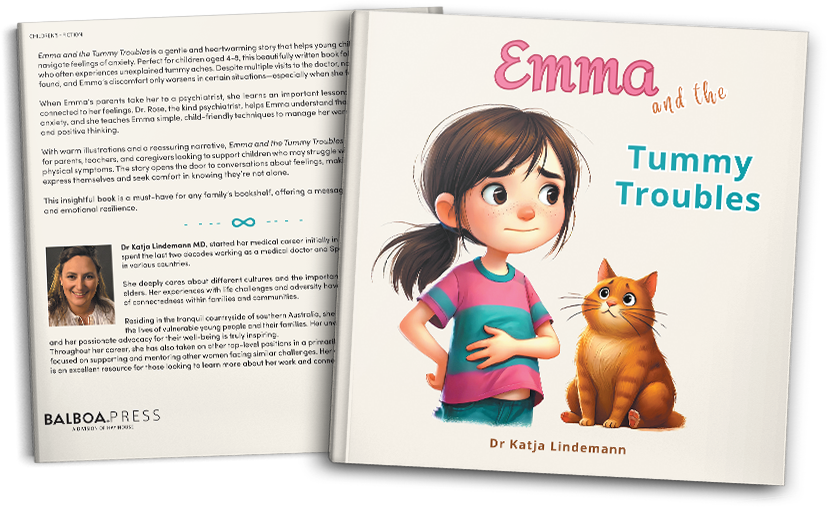
 Emma and the Tummy Troubles is a gentle and heartwarming story that helps young children understand and navigate feelings of anxiety. Perfect for children aged 4-8, this beautifully written book follows Emma, a little girl who often experiences unexplained tummy aches. Despite multiple visits to the doctor, no physical cause can be found, and Emma’s discomfort only worsens in certain situations—especially when she feels nervous or scared.
When Emma’s parents take her to a psychiatrist, she learns an important lesson: her tummy aches are connected to her feelings. Dr. Rose, the kind psychiatrist, helps Emma understand that her body is reacting to anxiety, and she teaches Emma simple, child-friendly techniques to manage her worries, like deep breathing and positive thinking.
With warm illustrations and a reassuring narrative, Emma and the Tummy Troubles is an invaluable resource for parents, teachers, and caregivers looking to support children who may struggle with anxiety or unexplained physical symptoms. The story opens the door to conversations about feelings, making it easier for children to express themselves and seek comfort in knowing they’re not alone.
This insightful book is a must-have for any family’s bookshelf, offering a message of understanding, hope, and emotional resilience.
Read an excerpt Order a copy now
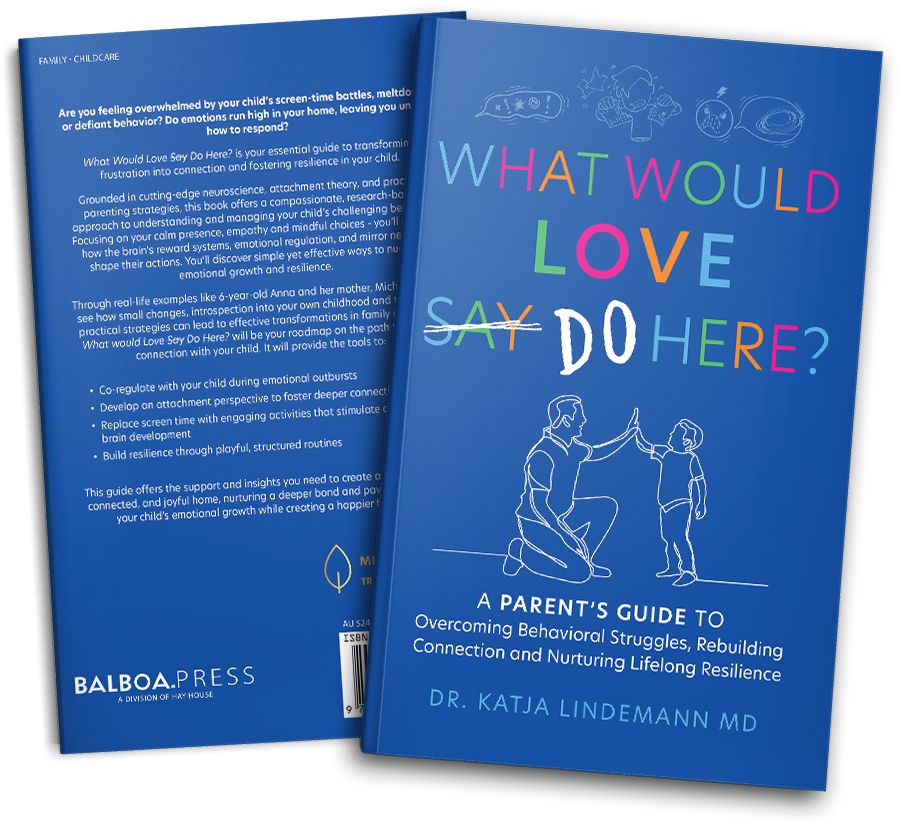 Are you feeling overwhelmed by your child’s screen-time battles, meltdowns, or defiant behavior? Do emotions run high in your home, leaving you unsure how to respond? What Would Love Say-Do Here? is your essential guide to transforming frustration into connection and fostering resilience in your child.
Grounded in cutting-edge neuroscience, attachment theory, and practical parenting strategies, this book offers a compassionate, research-based approach to understanding and managing your child’s challenging behavior. Focusing on your calm presence, empathy and mindful choices, you’ll explore how the brain’s reward systems, emotional regulation, and mirror neurons shape their actions. You’ll discover simple yet effective ways to nurture emotional growth and resilience.
Through real-life examples like 6-year-old Anna and her mother, Michelle, you’ll see how small changes, introspection into your own childhood and the use of practical strategies can lead to effective transformations in family dynamics. What would Love Say-Do Here? will be your roadmap on the path to deeper connection with your child. It will provide the tools to:
• Co-regulate with your child during emotional outbursts
• Develop an attachment perspective to foster deeper connection and trust
• Replace screen time with engaging activities that stimulate creativity and brain development
• Build resilience through playful, structured routines
This guide offers the support and insights you need to create a more peaceful, connected, and joyful home, nurturing a deeper bond and paving the way for your child’s emotional growth while creating a happier family life.
Read an excerpt Order a copy now
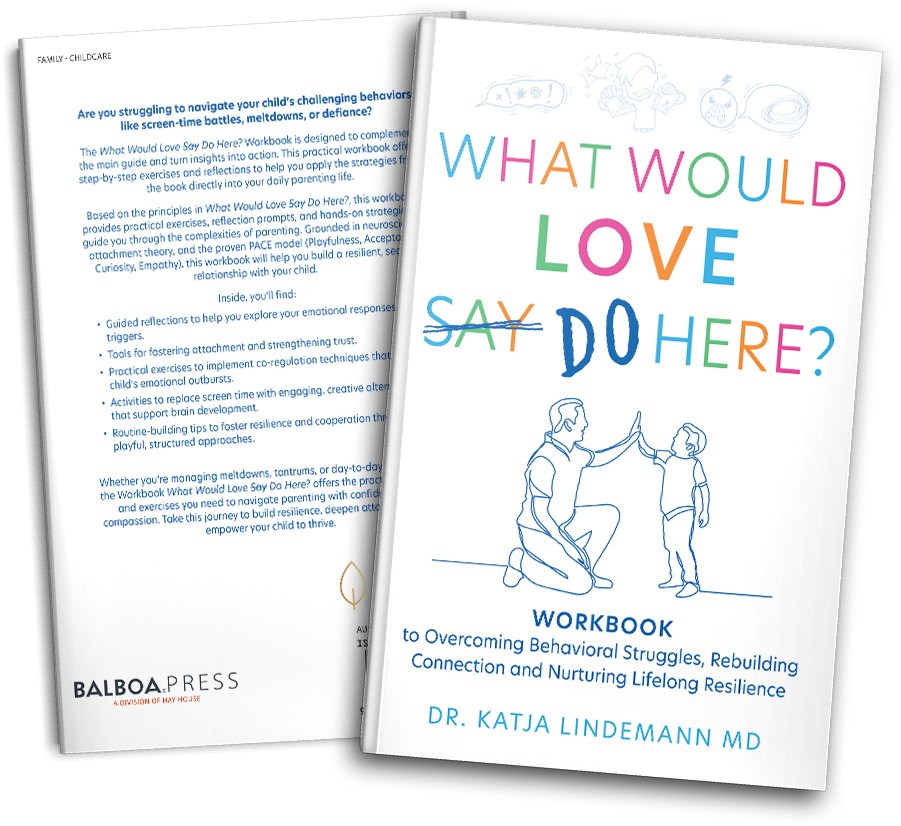 Welcome to the companion workbook for What Would Love Say Do Here? A Parent’s Guide to Overcoming Behavioural Struggles, Rebuilding Connection, and Nurturing Lifelong Resilience. Through hands-on exercises, self-reflection, and meaningful activities, this workbook helps you integrate the core concepts and strategies from the guide into your daily life. It’s designed to deepen your understanding of your child’s behavior while equipping you with practical tools to foster stronger, more compassionate connections.
This workbook invites you to actively engage in your parenting journey, turning theory into practice. You’ll begin to see how emotional regulation, the PACE model, attachment theory, and neurodevelopment intersect in real time as you interact with your child. By completing these exercises, you will gain insight into your child’s emotional world, develop greater awareness of your own responses, and learn how to manage behaviors with empathy and patience.
