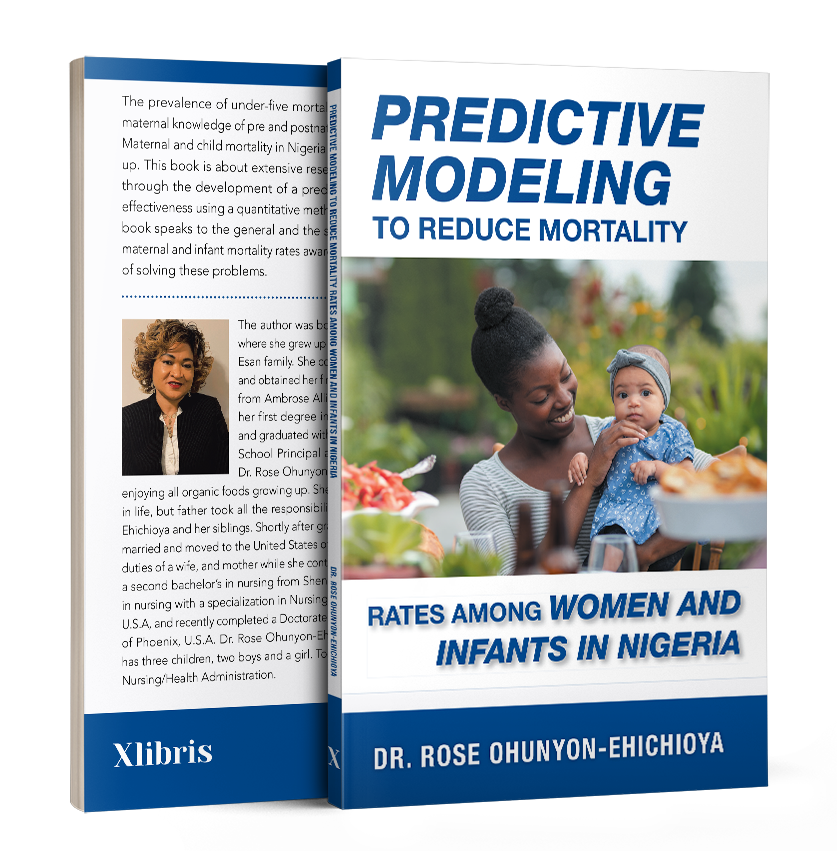
Maternal and under-five mortality (U5MR) is a public health threat to Nigeria. Among sub-Saharan African countries, Nigeria is disproportionately affected by maternal and U5MR. The specific problem is the prevalence of U5MR in Nigeria.
The purpose of this quantitative retrospective cohort study was to develop a predictive model to analyze and provide an estimate of reduced risk factors and mortality rates based on maternal knowledge.
A quantitative methodology with retrospective research design was develop to predict the risk factors associated with under-five child mortality. The conceptual framework used to guide the study was casual impact framework, an epidemiological framework. The risk factors selected for investigation were based on a review of the literature.
Data for the study was collected ex post facto from the 2018 Nigeria Demographic Health Survey. Using logistic regression analysis, risk factors were evaluated for the child and maternal constructs, resulting in the development of a statistically significant model for predicting U5MR. Among the evidence evaluated, six constructs emerged to be significant risk factors for U5MR: total children ever born, number of living children, number of children 5 years and under, births in last five years, size of child at birth, and children born multiple.
The evidence and outcomes from this study are relevant to policy makers and as a tool for health service processionals to prioritize and allocate limited resources to prevent public health consequence.
A culturally appropriate healthcare program to provide sociocultural programs and services to aid vulnerable populations in family planning is required to reduce the risk factors associated with child and maternal health.
A longitudinal study is required to evaluate the predicted and actual outcomes since many factors including changing demographics, socioeconomic or environmental changes external to the model may evolve as a threat to the effectiveness of the model.